Camelid Herd Worm Count Test

Further information

A cost effective way of determining the average gastrointestinal parasitic burden of a group of up to 5 camelids. Animals should live together, be healthy, be of the same species and of similar age and reproductive status. This faecal screen is for up to 5 animals and will produce a single result. Our wormcount screen uses testing methods such as the Modified Stoll’s test to detect gastrointestinal parasite eggs and coccidia. This test is more sensitive compared to other test methods used in other labs. Our test reports gastrointestinal parasite eggs to a sensitivity of 5 eggs per gram (epg). Please note that this screen is not suitable for companion animals, reptiles or equines.

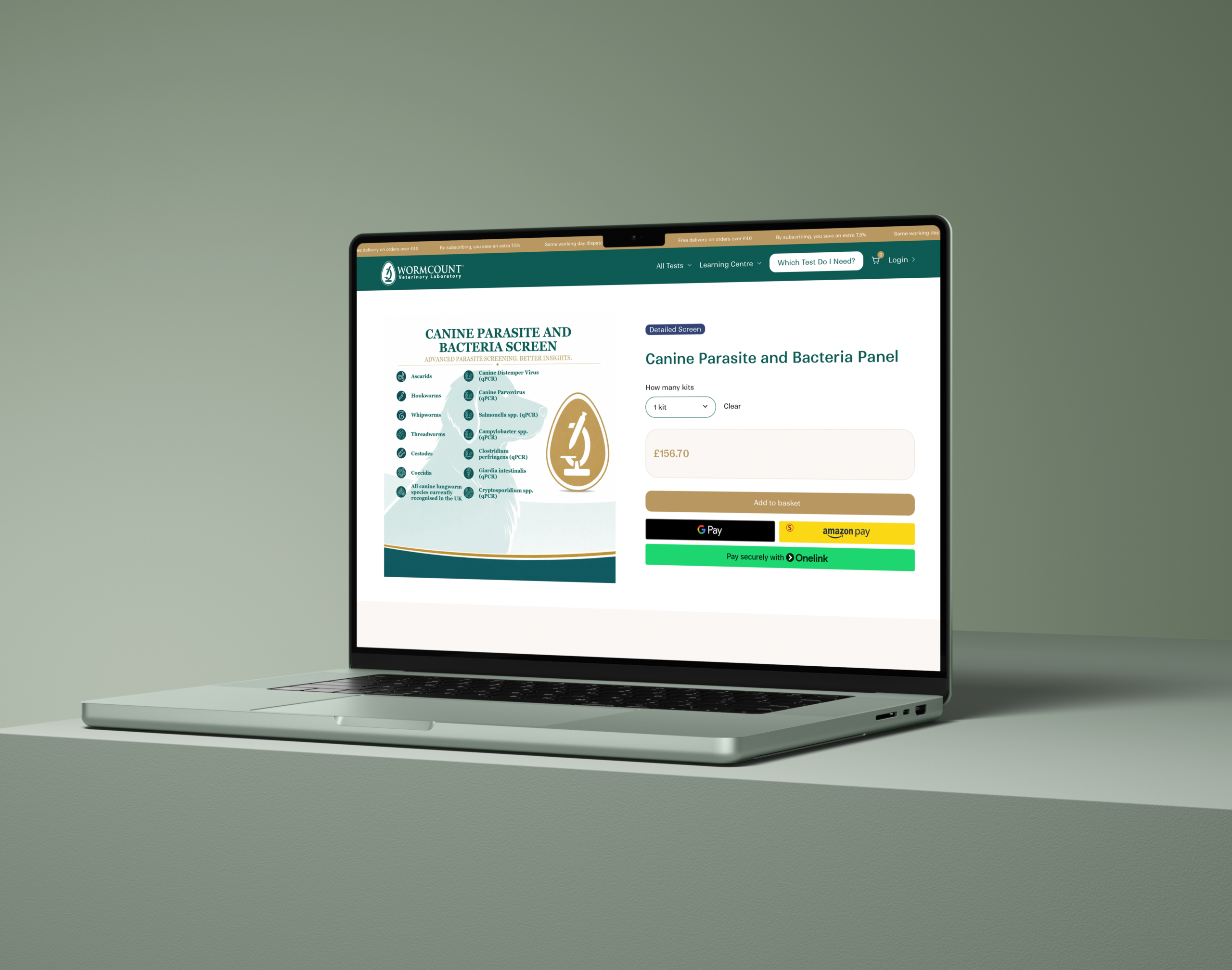
The Camelid Herd Worm Count Test is suitable for testing up to 10 alpacas or llamas from the same herd, providing a useful overview of parasite burdens across the group.

Camelids can be clinically affected by relatively low parasite burdens. This test therefore uses a sensitive faecal egg-counting approach to identify and quantify relevant gastrointestinal parasites and coccidia in each animal tested.

All samples are examined individually by fully trained laboratory staff using advanced microscopy in our veterinary laboratory. Results are reported for each animal, allowing you to identify differences in parasite burdens across the herd and make more targeted parasite-control decisions.

We recommend this test for: routine herd-health monitoring, establishing the parasite status of a group, identifying higher-burden animals, checking poorly performing animals, or reviewing the response to a parasite-control programme.

Where species level confirmation of Haemonchus contortus (Barber Pole worm) is required, our dedicated Barber Pole Worm qPCR Test is recommended.

We provide a sensitive eggs-per-gram assessment of relevant gastrointestinal nematodes and records other parasite findings such as cestodes and coccidia. The live Wormcount camelid service specifically includes Barber Pole worm within the broader microscopy report and recognises Eimeria macusaniensis. Where species-level confirmation of Haemonchus is required, a separate qPCR test is the more specific option.

Wormcount testing is completed, reviewed and issued within 24 hours of arrival into the laboratory.

This kit is for one animal and includes a recyclable padded return envelope, free tracked 24-hour return postage, a laboratory request form and instruction sheet, a recyclable sample collection box in a resealable write-on bag, a biodegradable second sealable bag and a biodegradable natural wood sampling spoon.

How does it work?

1. Choose and order your test

Select the appropriate parasite test for your animal(s), or use our quick guide to find the most suitable option.

Choose and order your test

Collect the sample using your test kit and return it to our laboratory using the free, 24-hour tracked delivery which is included in your kit.

2. Send your sample

The laboratory team analyses your sample and provides a detailed PDF report via email, with access to our clinical team for further guidance if needed.

3. Receive your results
Choose and order your test
2. Send your sample
3. Receive your results
Related Tests