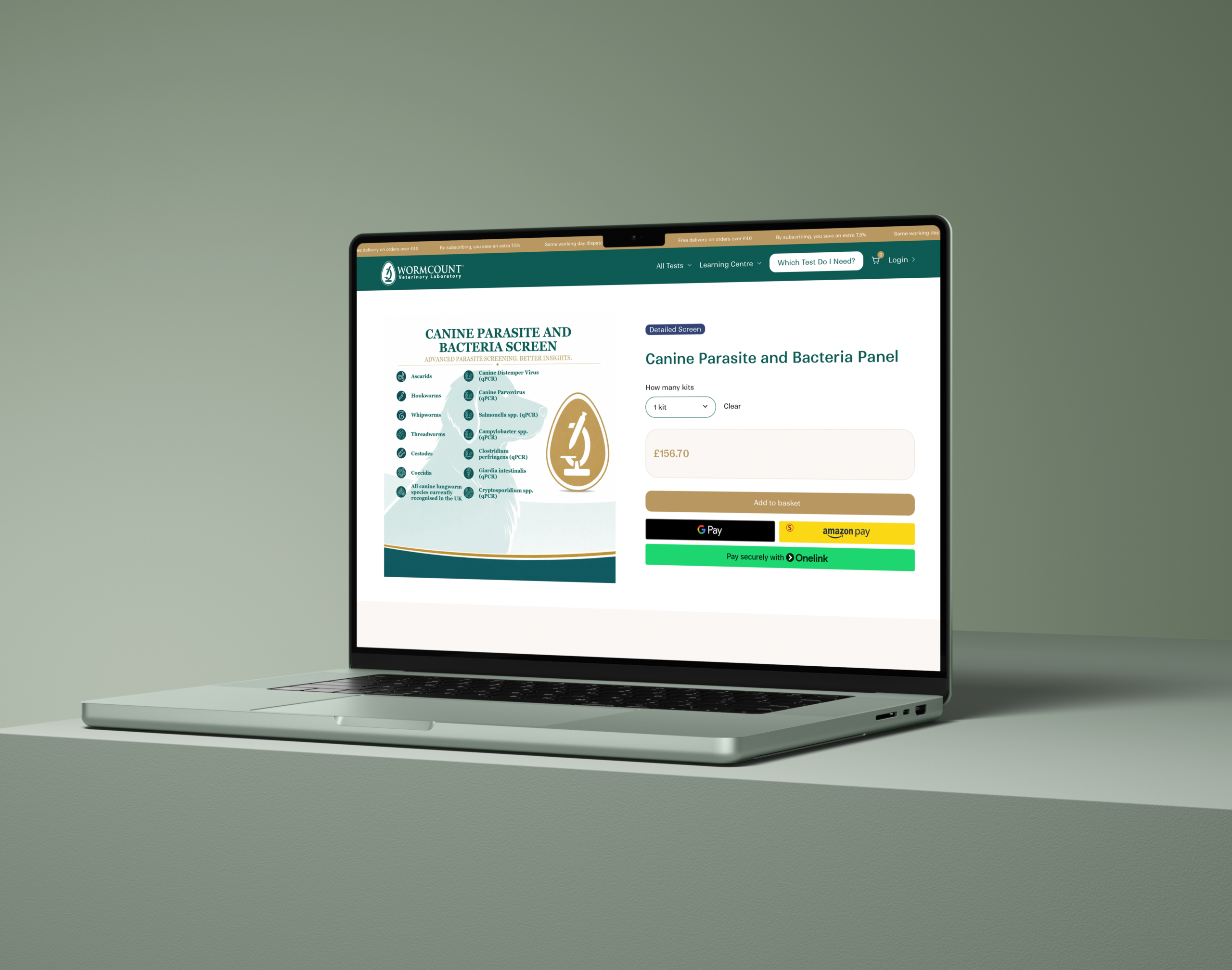
Detailed Screen

Canine Parasite and Bacteria Panel

Further information

Our Canine Parasite and Bacteria Panel combines a gastrointestinal worm count, extended canine lungworm screen and seven-target qPCR panel in one comprehensive laboratory investigation.

This package uses specialist laboratory methods to screen for gastrointestinal parasites, respiratory parasites and selected viral, bacterial and protozoal targets. It can help guide further investigation in dogs with persistent or recurrent digestive concerns.

What does the Canine Parasite and Bacteria Panel include?

  • Worm Count Test: Microscopic screening for gastrointestinal worm eggs and relevant protozoa, with quantitative counts where appropriate.
  • Lungworm Screen: Specialist screening for the five canine respiratory parasite targets included in our current screen.
  • Seven Target qPCR Panel: Molecular screening for canine parvovirus, canine distemper virus, Salmonella, Campylobacter, Clostridium perfringens type A, Giardia duodenalis and Cryptosporidium.

Who is this test suitable for?

We recommend considering this broader investigation for:

  • Dogs with persistent or recurrent diarrhoea.
  • Dogs with unexplained soft stools or other ongoing gastrointestinal signs.
  • Dogs with a previous history of intestinal worms, lungworm or gastrointestinal pathogens.
  • Dogs with increased exposure through scavenging, hunting or shared animal environments.
  • Cases where a veterinary surgeon recommends wider investigation of possible infectious causes.

How does the testing process work?

Each kit includes collection instructions and the materials needed to return the required samples to our laboratory.

For lungworm screening and the qPCR Panel faecal samples must be collected over three consecutive days. This is essential because parasite shedding can be intermittent. Follow the separate instructions for the worm count and qPCR components.

Our trained laboratory team performs the appropriate microscopy, lungworm screening and qPCR procedures. We email each set of findings when reviewed, so results may arrive separately.

Every panel includes clear laboratory reports and free after-test advice where required.

Our Canine Parasite and Bacteria Panel brings together three specialist laboratory procedures.

Gastrointestinal Worm Count

Our laboratory team uses microscopy to examine a faecal sample for gastrointestinal worm eggs and relevant protozoa.

We identify parasites detected in the sample and quantify egg or oocyst counts where appropriate. These findings can support a more targeted approach to worming.

Extended Canine Lungworm Screen

Our laboratory team uses specialist methods to examine the lungworm sample for relevant larvae and eggs. The extended screen covers the five canine respiratory parasite targets listed in the results section.

Lungworm testing uses different procedures from a routine worm count. Faecal samples must be collected over three consecutive days because parasite shedding can be intermittent.

Seven-Target qPCR Panel

We use quantitative polymerase chain reaction (qPCR) to detect genetic material from seven selected targets associated with gastrointestinal disease in dogs:

  • Canine parvovirus (CPV).
  • Canine distemper virus (CDV).
  • Salmonella spp.
  • Campylobacter spp.
  • Clostridium perfringens type A.
  • Giardia duodenalis.
  • Cryptosporidium spp.

qPCR detects genetic material from the listed targets. A detected result should be interpreted with the dog’s clinical history and veterinary findings; detection alone does not establish that the organism caused the signs.

Laboratory Reporting

Our trained laboratory team examines and reviews each sample before issuing clear, easy-to-understand results.

We report all three screening components individually and provide free after-test advice where required.

Kit use-by date: 6 weeks from the date of purchase.

We report the findings from the worm count, extended lungworm screen and seven-target qPCR panel separately.

Worm Count Results

Our laboratory report identifies gastrointestinal parasite eggs and relevant protozoa detected during microscopic examination. The screen includes:

  • Roundworm-type eggs.
  • Hookworm-type eggs.
  • Whipworm eggs.
  • Tapeworm eggs, where present.
  • Relevant intestinal protozoa and coccidia.

Where appropriate, we quantify findings as eggs per gram (EPG) or oocysts per gram (OPG) of faeces.

If we do not detect parasites above the detectable limits of the test, we state this clearly in the report.

Lungworm Screen Results

Our extended canine lungworm screen uses specialist laboratory methods to look for respiratory and nasal parasites that may shed larvae or eggs in faeces. The screen includes:

  • Angiostrongylus vasorum – French heartworm.
  • Crenosoma vulpis – fox lungworm.
  • Oslerus osleri – tracheal lungworm.
  • Filaroides hirthi – pulmonary lungworm.
  • Eucoleus spp. – respiratory and nasal capillarids.

We report whether relevant larvae or eggs were detected and, where appropriate, identify the parasite and assess the findings.

Lungworm larvae and eggs may be shed intermittently. Faecal samples collected over three consecutive days are essential for this screening procedure.

qPCR Panel Results

Our qPCR panel checks for genetic material from seven selected viral, bacterial and protozoal targets. We report each target as Detected or Not Detected:

Faecal samples collected over three consecutive days are essential for this screening procedure.

  • Canine parvovirus (CPV).
  • Canine distemper virus (CDV).
  • Salmonella spp.
  • Campylobacter spp.
  • Clostridium perfringens type A.
  • Giardia duodenalis.
  • Cryptosporidium spp.

A detected qPCR target does not necessarily mean that organism is causing clinical disease. Results should be interpreted alongside your dog’s history, signs and any veterinary findings.

Understanding Your Results

Our trained laboratory team reviews the findings before sending your results by email. We report each component separately, so you can see which parasites or other targets were detected and review any relevant counts.

Please note: Parasite shedding may be intermittent, so a negative result does not completely exclude infection. This is particularly relevant to tapeworms and lungworm.

As the three components use different laboratory methods, we may issue results separately as each test is completed.

Every package includes clear laboratory results and free after-test advice where required.

Worm count: We issue the worm count result within 24 hours of the sample arriving at our laboratory.

Lungworm screen: We issue the lungworm result on the next working day following arrival at our laboratory.

qPCR panel: We complete and review qPCR testing within five working days of sample arrival and issue the result when this review is complete.

Lungworm sample collection: Collect faecal samples over three consecutive days. This is an essential requirement for the lungworm screen. Keep samples in a cool place. Do not refrigerate or freeze lungworm samples.

Results: The components have different processing times, so we may email them separately as each test is completed.

Use-by date: The kit provides a minimum usage window of six weeks from the date of order. Where possible, we supply the longest available use-by period.

Your kit includes the materials needed to collect and return your faecal sample(s) to our laboratory:

  • A recyclable padded return envelope with prepaid Tracked 24 return postage.
  • Laboratory request forms and clear sample collection instructions.
  • Recyclable sample collection containers and resealable write-on bag(s).
  • Biodegradable secondary sealable bags.
  • Biodegradable natural wood sampling spoon.

Please follow the instructions for each component, as separate samples may be required.

How does it work?

1. Choose and order your test

Select the appropriate parasite test for your animal(s), or use our quick guide to find the most suitable option.

Choose and order your test

Collect the sample using your test kit and return it to our laboratory using the free, 24-hour tracked delivery which is included in your kit.

2. Send your sample

The laboratory team analyses your sample and provides a detailed PDF report via email, with access to our clinical team for further guidance if needed.

3. Receive your results
Choose and order your test
2. Send your sample
3. Receive your results
Related Tests