Worm Count Test for Dogs

Further information

Our Dog Worm Count Test provides laboratory screening for gastrointestinal parasite eggs and relevant protozoa in your dog’s faecal sample.

Using specialist microscopy techniques, our trained laboratory team identifies parasites and measures egg or oocyst counts where appropriate. As a result, the test supports a targeted approach to parasite control and helps you make informed decisions about your dog’s health.

What does the Dog Worm Count Test include?

The gastrointestinal parasite screen checks for:

  • Roundworm-type eggs.
  • Hookworm-type eggs.
  • Whipworm eggs.
  • Tapeworm eggs, where present.
  • Relevant intestinal protozoa and coccidia.

Who is this test suitable for?

Regular worm counts can help monitor gastrointestinal parasites and support more informed worming decisions. For example, we recommend considering this screening for:

  • Dogs undergoing routine gastrointestinal parasite monitoring.
  • Dogs that spend significant time outdoors or regularly scavenge.
  • Pets with a previous history of gastrointestinal worms.
  • Owners who want to make more targeted decisions about worming treatments.
  • Dogs that need a follow-up worm count after treatment, where appropriate.

How does the testing process work?

Each kit includes clear instructions and the materials needed to collect and return a fresh, representative faecal sample to our laboratory.

Once your sample arrives, our trained laboratory team examines it using specialist microscopy techniques. Following examination and review, we email your laboratory report within 24 hours of the sample arriving at our laboratory.

Although a worm count provides useful information about intestinal parasites, it reflects the findings in the submitted sample. For example, some parasites, particularly tapeworms, shed eggs intermittently. Therefore, a negative result does not completely exclude infection.

In addition, every Dog Worm Count Test includes clear laboratory results and free after-test advice where required.

Looking for lungworm screening too?

If you would also like to screen for canine lungworm, our Combined Worm Count and Lungworm Test for Dogs includes both laboratory tests in one convenient package. This provides broader parasite screening and helps you monitor gastrointestinal worms and canine lungworm together.

Please note that the lungworm component requires faecal samples collected over three consecutive days.

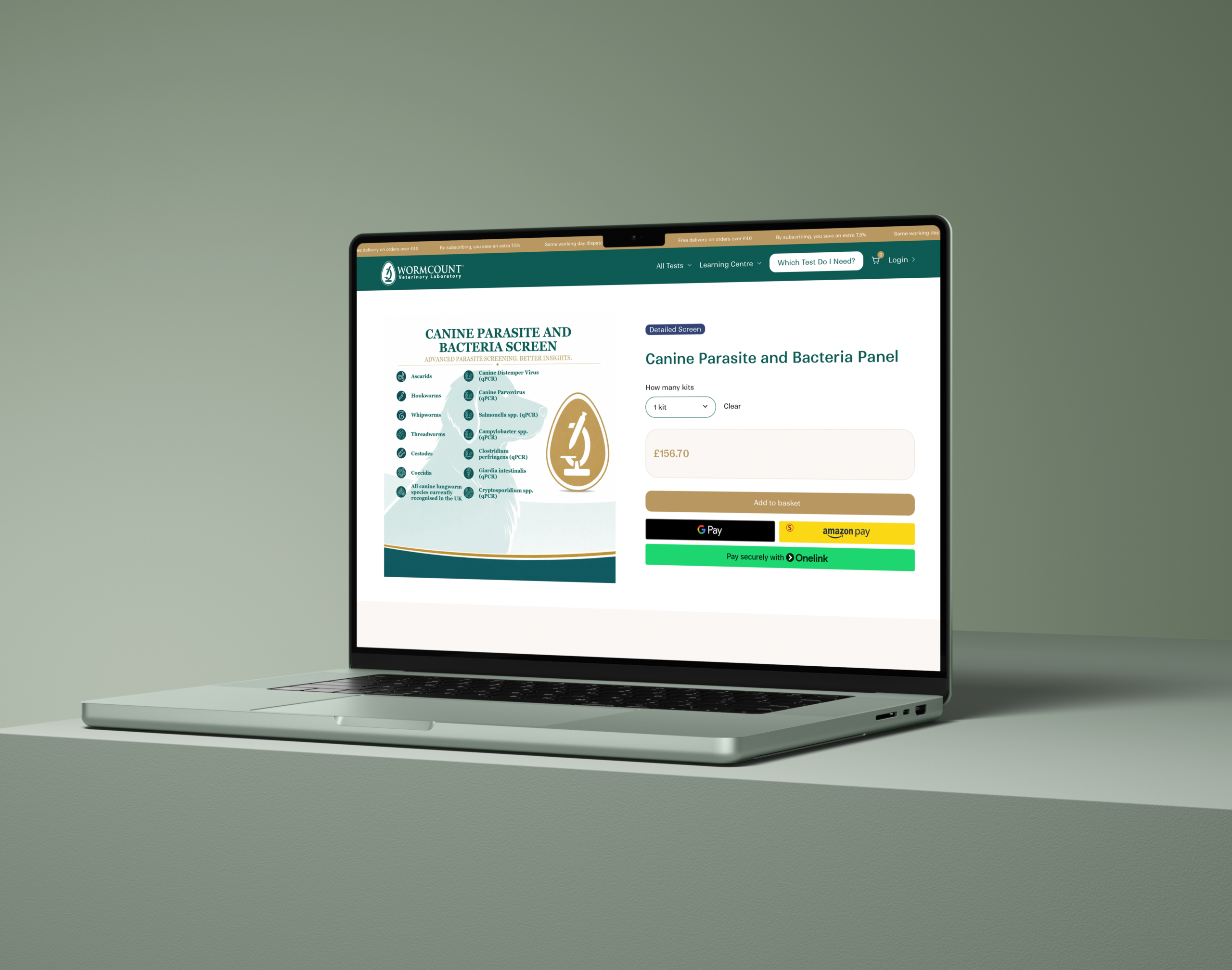
Our Dog Worm Count Test uses laboratory microscopy to assess gastrointestinal parasite egg and oocyst shedding.

Gastrointestinal Worm Count

Our laboratory team uses microscopy to examine a faecal sample for gastrointestinal worm eggs and relevant protozoa.

We identify parasites detected in the sample and quantify egg or oocyst counts where appropriate. These findings can support a more targeted approach to worming.

Parasite Quantification

Where appropriate, we report the number of eggs per gram (EPG) or oocysts per gram (OPG) of faeces. This provides an indication of the egg or oocyst burden present in the submitted sample.

Laboratory Reporting

Our trained laboratory team reviews the findings and issues a clear report by email. Free after-test advice is available where required.

We report gastrointestinal parasite eggs and relevant protozoa detected in the submitted faecal sample.

Worm Count Results

Our laboratory report identifies gastrointestinal parasite eggs and relevant protozoa detected during microscopic examination. The screen includes:

  • Roundworm-type eggs.
  • Hookworm-type eggs.
  • Whipworm eggs.
  • Tapeworm eggs, where present.
  • Relevant intestinal protozoa and coccidia.

Where appropriate, we quantify findings as eggs per gram (EPG) or oocysts per gram (OPG) of faeces.

If we do not detect parasites above the detectable limits of the test, we state this clearly in the report.

Understanding Your Results

We identify relevant parasites and provide quantitative findings where appropriate. If we do not detect parasites above the detectable limits of the test, we state this clearly.

Your laboratory report is emailed to you, with free after-test advice where required.

Turnaround time: We issue worm count results within 24 hours of the sample arriving at our laboratory.

Sample collection: Collect a fresh, representative faecal sample and follow the instructions supplied with your kit.

After treatment: If you are using the test as a post-treatment check, we generally recommend waiting around three weeks after treatment before submitting a sample.

Results: We email your report once the laboratory examination and review are complete.

Your kit includes the materials needed to collect and return your faecal sample(s) to our laboratory:

  • A recyclable padded return envelope with prepaid Tracked 24 return postage.
  • Laboratory request forms and clear sample collection instructions.
  • Recyclable sample collection containers and resealable write-on bag(s).
  • Biodegradable secondary sealable bags.
  • Biodegradable natural wood sampling spoon.

Each kit is for one dog. Please follow the sample collection instructions supplied.

How does it work?

1. Choose and order your test

Select the appropriate parasite test for your animal(s), or use our quick guide to find the most suitable option.

Choose and order your test

Collect the sample using your test kit and return it to our laboratory using the free, 24-hour tracked delivery which is included in your kit.

2. Send your sample

The laboratory team analyses your sample and provides a detailed PDF report via email, with access to our clinical team for further guidance if needed.

3. Receive your results
Choose and order your test
2. Send your sample
3. Receive your results
Related Tests