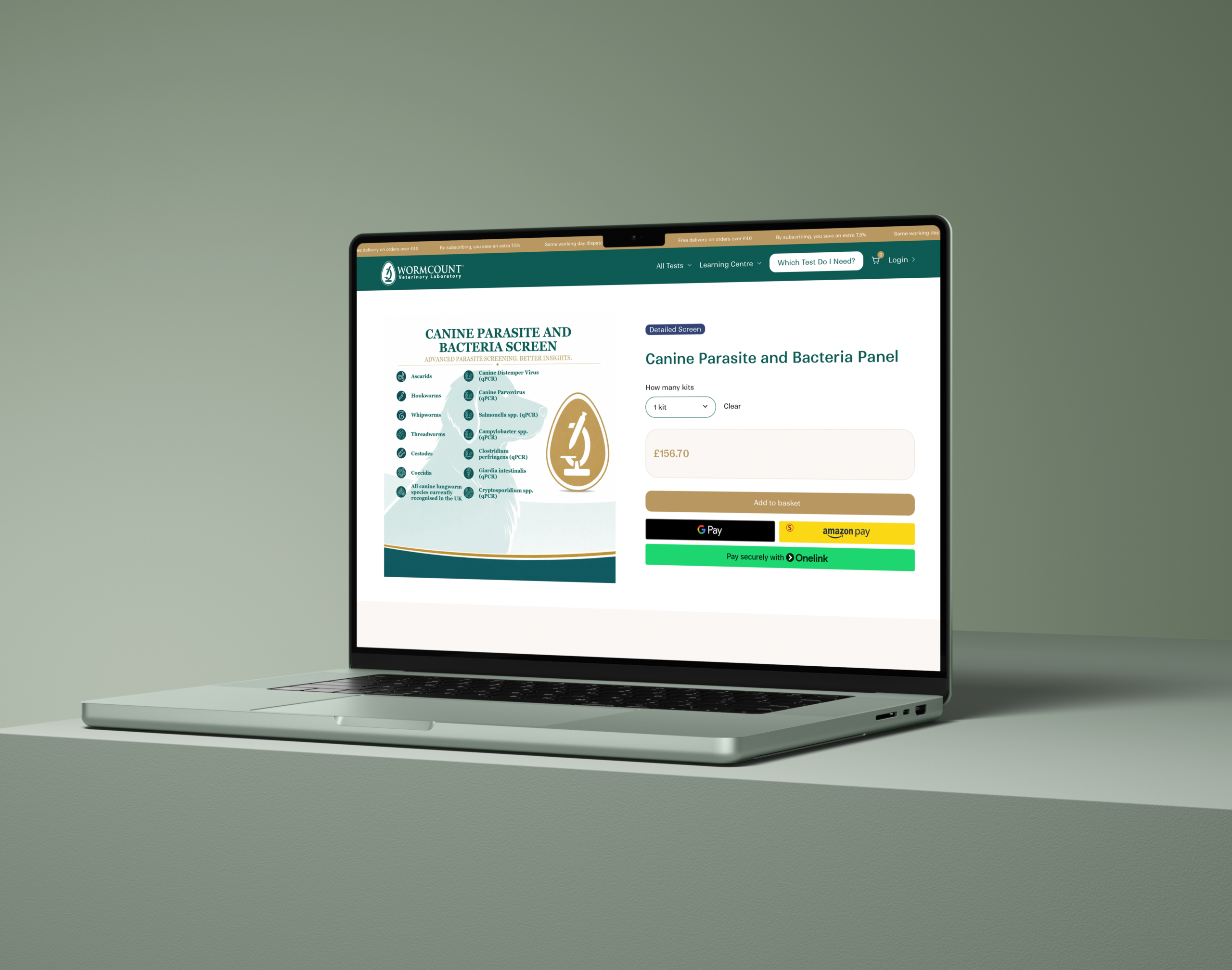
Our Feline Parasite and Bacteria Panel combines a gastrointestinal worm count, feline lungworm screen and eight-target qPCR panel in one comprehensive laboratory package.
By combining microscopy, specialist lungworm methods and molecular testing, the panel screens for selected parasitic, bacterial and viral targets. It is particularly useful when a broader investigation of ongoing gastrointestinal signs is needed.
This package brings together the following tests:
A broader investigation may be helpful when several possible causes of gastrointestinal disease need to be considered. For example, this panel may suit:
The kit contains instructions and the materials needed to collect the different faecal samples.
Collect faecal material over three consecutive days for the lungworm component. The worm count and qPCR components have separate sample requirements described in the kit.
The laboratory reviews each component using the appropriate method. Since testing times differ, we may issue the microscopy, lungworm and qPCR results separately.
The qPCR component must be used by the date printed on the laboratory request form. Every panel also includes clear laboratory reports and free after-test advice where required.
Our Feline QuadSave Parasite Test combines a worm count, lungworm screen and Giardia and Cryptosporidium antigen testing, without the additional qPCR panel.
Our Feline Parasite and Bacteria Panel combines a gastrointestinal worm count, feline lungworm screen and eight-target qPCR panel for a broader investigation of selected infectious targets.
Laboratory microscopy screens faecal material for the listed feline roundworms, hookworms, tapeworm eggs and Cystoisospora spp. We quantify findings as EPG or OPG where appropriate.
A separate sample collected over three consecutive days is examined using specialist larval detection for Aelurostrongylus abstrusus and faecal microscopy for Eucoleus aerophilus eggs.
Targeted molecular testing screens for Feline Panleukopenia Virus, Feline Coronavirus, Tritrichomonas foetus, Giardia, Cryptosporidium, Salmonella, Campylobacter and Clostridium perfringens type A.
A positive qPCR result indicates that genetic material associated with the target was detected. Therefore, results should be interpreted in light of your cat’s clinical signs, history and other investigations.
Each component is reviewed separately and presented clearly. The microscopy and lungworm results may be available before the qPCR panel is complete.
Our trained laboratory team issues clear results and offers free after-test advice where required.
Our Feline Parasite and Bacteria Panel reports the feline worm count, lungworm screening and each of the eight qPCR targets separately.
The feline worm count report covers the following gastrointestinal parasite targets.
The listed nematode findings are quantified as eggs per gram (EPG), where appropriate. A result of <20 EPG is recorded as Below detectable limit.
Cestode eggs and Cystoisospora spp. are reported qualitatively, including whether they were seen in the submitted sample.
The report may also record other artefacts observed in the submitted faecal sample.
Our extended feline respiratory parasite screen examines the faecal sample for the following targets:
The laboratory report records the detection of relevant lungworm larvae or respiratory parasite eggs. Where the findings allow, we provide identification and explanatory comments.
A negative faecal result cannot completely exclude infection because larvae or eggs may be shed intermittently.
The qPCR panel reports each molecular target as Detected or Not Detected.
Detecting genetic material does not necessarily establish the cause of a cat’s clinical signs. In particular, feline coronavirus detection alone does not diagnose feline infectious peritonitis (FIP).
Parasites may shed eggs, oocysts or larvae intermittently. Therefore, a result below the detectable limit, or a qualitative result of none seen, does not completely exclude infection.
Our trained laboratory team reviews the findings before emailing the results. The different components may be reported separately as each is completed.
Clear laboratory reporting and free after-test advice are included where required.
Worm count: Our laboratory team completes, reviews and emails results within 24 hours of the sample arriving at our laboratory.
Lungworm screen: This extended procedure takes longer than a routine worm count. Results are issued on the next working day following arrival at our laboratory.
qPCR panel: Our laboratory team completes and reviews the eight-target qPCR panel within 5 working days of sample arrival.
Sample collection: The lungworm component requires faecal material collected over three consecutive days. Follow the collection and storage instructions supplied with your kit.
Because the components require different laboratory methods, results may be issued separately as each part is completed.
Use-by date: The qPCR component must be used by the date shown on the laboratory request form. The kit has a minimum usage window of 5 weeks from the order date.
This kit is prepared for one cat and includes the materials needed to collect and return the required faecal sample or samples to our laboratory.
For the lungworm component, the instructions explain how to collect faecal material over three consecutive days.
Select the appropriate parasite test for your animal(s), or use our quick guide to find the most suitable option.
Collect the sample using your test kit and return it to our laboratory using the free, 24-hour tracked delivery which is included in your kit.
The laboratory team analyses your sample and provides a detailed PDF report via email, with access to our clinical team for further guidance if needed.