Reptile Parasite Testing Kits

Laboratory-accurate parasite screening for tortoises, snakes, lizards and other reptiles.
Wormcount Reptiles Feature

Parasites in Reptiles Can Be Easy to Miss

Reptiles are instinctively adept at concealing signs of illness. This is a survival trait that makes internal parasites particularly difficult to detect without testing. Many reptiles can carry a significant parasite burden without displaying any outward symptoms. However, if left unmonitored, that burden can have a serious impact on their long-term health and welfare.

Wormcount provides accurate, laboratory-based reptile parasite testing kits direct to owners across the UK, covering tortoises, bearded dragons, snakes, geckos, iguanas, chameleons and many other species. Simply collect your reptile’s sample using our easy-to-use kit and send it to our laboratory using the free tracked delivery included in every order. Our experienced team will return a detailed PDF report, with free access to our in-house clinical team for guidance on next steps where needed.

Reptile Parasite Tests From Our Laboratory

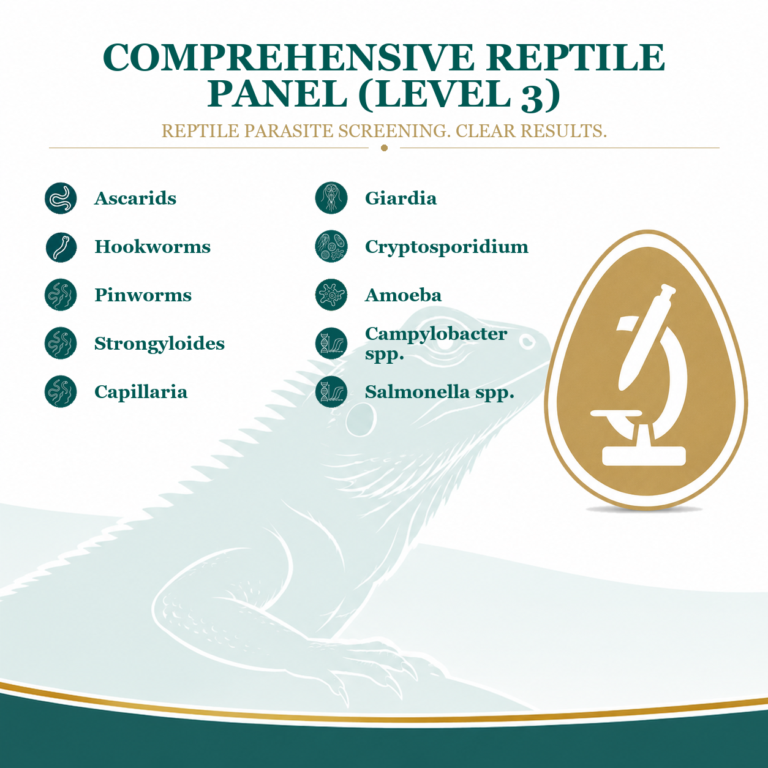
We offer three levels of reptile parasite screening, from a standard faecal egg count through to a comprehensive parasite and bacteria screen. The right test will depend on your reptile’s species, lifestyle and risk level. Our quick guide can help you choose if you’re not sure.

Common Parasites Found in Reptiles

Intestinal Worms

Pinworms are among the most frequently identified findings in reptile faecal screens. The species detected will vary depending on your reptile’s diet and environment, but also commonly include ascarids, strongyloides, hookworm, capillaria and tapeworm. Herbivorous reptiles such as tortoises can pick up parasites through grazing on contaminated ground or consuming unwashed food, whilst carnivorous and omnivorous species (particularly those fed live or fresh prey) are at elevated risk and should be screened at least every three months. Our faecal egg count identifies and quantifies each worm species present, along with protozoans including coccidia, balantidium and nyctotherus as standard, giving a thorough picture of your reptile’s internal parasite status.

Cryptosporidium is a protozoal parasite of particular concern in reptiles, especially snakes and lizards, and is unfortunately one of the more serious findings a reptile owner can receive. It is highly contagious between reptiles and there is currently no reliable curative treatment available, making early detection critically important, especially in collections where multiple animals are housed. Common signs include persistent regurgitation, weight loss and wasting, though again these may not always be present. Our dedicated Cryptosporidium antigen test is a fast, accurate way to screen for this pathogen, and is available as a standalone test or alongside other parasite screening.

Coccidiosis is caused by single-celled protozoan parasites and is a very common finding in reptiles, particularly in tortoises, bearded dragons and other lizards. Low-level coccidia infection may cause few or no symptoms, but in higher burdens (or in animals that are stressed, young or immunocompromised) it can lead to lethargy, loss of appetite, soft or watery droppings and significant weight loss. Coccidia are detected as part of our standard reptile parasite screen, meaning no additional test is required to check for their presence. Where elevated levels are found, our clinical team can advise on appropriate next steps and point you towards a specialist reptile vet for treatment where needed.

Common Parasites Found in Reptiles